Sovereignty isn't a place
Sovereignty is everywhere. But what the hell do we mean by it?
In 2021 Randy Williams bought 11.07 acres of Californian desert for $19,000. In doing so he created a 'new republic', which has a raccoon as its national animal and a ban on Crocs footwear. He named it after a music genre called 'Slow Jams', so naturally it's The Republic of Slowjamastan.
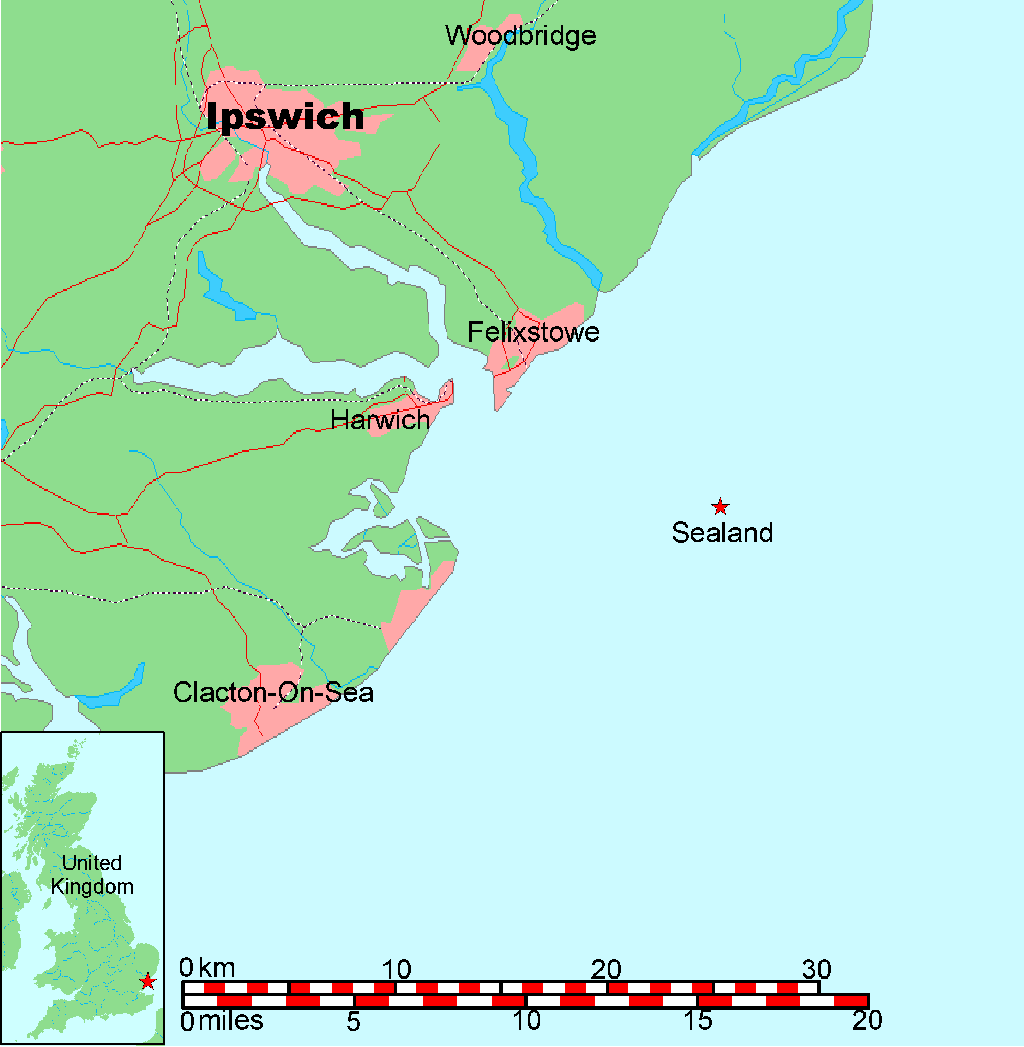
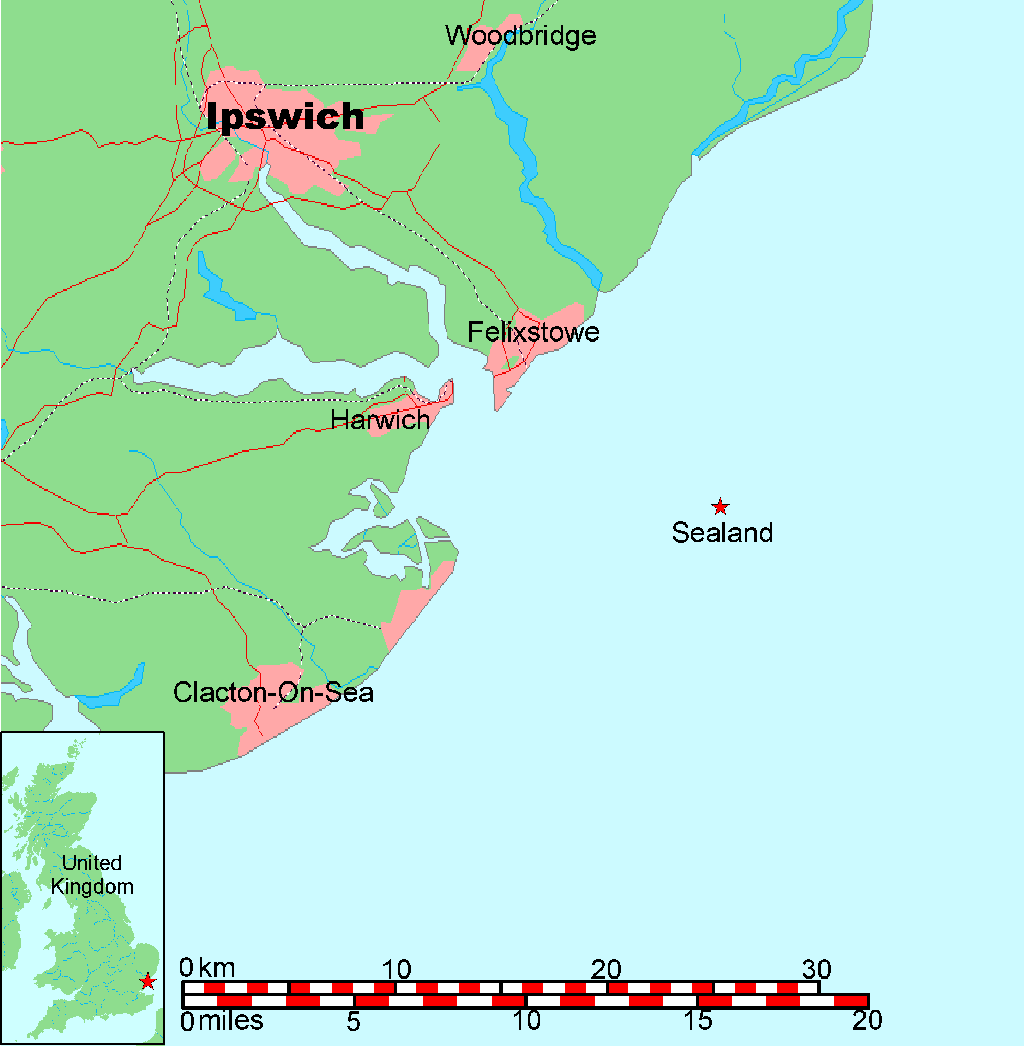
Closer to home, for me at least, is the Principality of Sealand, a few miles off the Suffolk coast and highlighted on the map below. "The world's smallest country, founded in 1967 in the North Sea". It has its own flag, constitution, currency, passports and royal lineage, apparently.
There are many other examples, and most are weird. But all of them have at least one thing in common: the idea of choice and self-determination. They're all chasing sovereignty.
Sovereignty is everywhere at the moment. But for all the use of the word, there's very rarely an explanation of what we actually mean by it. I've had lots of conversations about this, and I think it's important to be clear about language, at least as much as I can, especially as I'm putting together an Unconference on Digital Sovereignty. So what is sovereignty, and perhaps more importantly, what do I mean when I talk about it?
Perhaps fuelled by the slightly/majorly nationalistic tone of world politics, there's a tendency to default to sovereignty being about nation states. Geopolitical boundaries. Home soil. But location by itself is often irrelevant. In our TechFreedom work we have a lens called 'Jurisdiction'. The location of a data centre isn't the relevant part; it's where the company that 'owns' the data centre is from that governs jurisdiction over the data. I think that's a useful place to start unpicking sovereignty. Just because a thing is in a specific location doesn't make it sovereign.
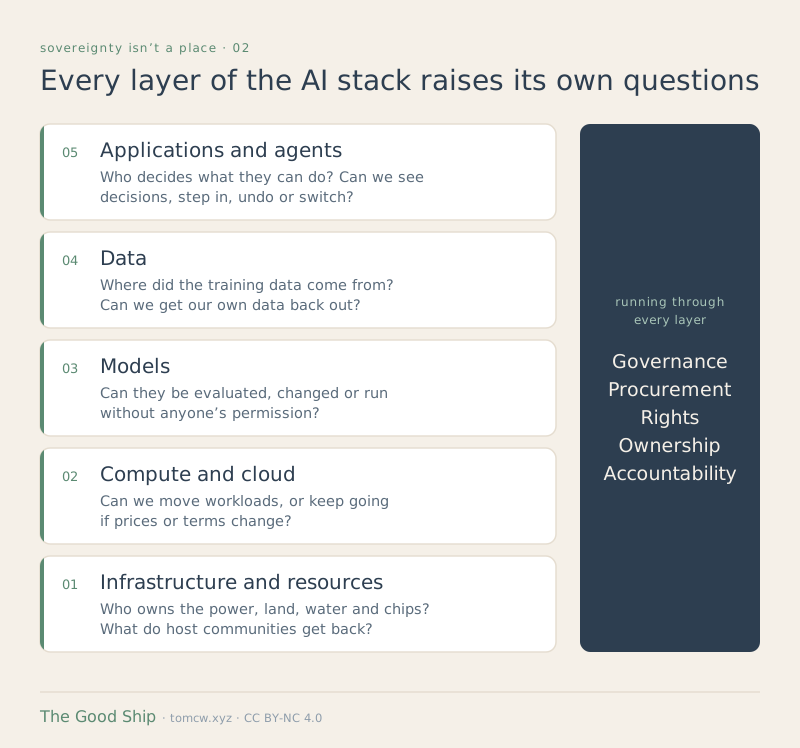
Much of the discussion is around 'Sovereign AI', but what do we mean there? Do we mean frontier models made in Britain, or Germany? Data centres running compute on British soil? Open-weight models? From my perspective there are many layers in the AI stack. Sovereignty comes into all of them, but location doesn't define any of them.
It comes back to those weird, wonderful and slightly wacky micronations. It's about choice and more imprtantly being able to act on those choices.
Choice, and being able to use it
You can have a flag, a constitution and a raccoon and still not be able to govern yourself. Nobody recognises Sealand. Declaring yourself sovereign doesn't make you sovereign.
The House of Commons Library's 2026 briefing on digital sovereignty frames it as an organisation's agency and capacity to make informed decisions about its digital future. I actually quite like that, because it moves the conversation away from where something is and towards what we're able to do.
For me sovereignty is about meaningful choice and the ability to act on it. Having alternatives, yes, but also having the knowledge, money, rights and practical means to actually pick one. A choice you can't exercise isn't much of a choice.
Sovereignty for whom?
Part of why these conversations get muddled is that people are often talking about different things.
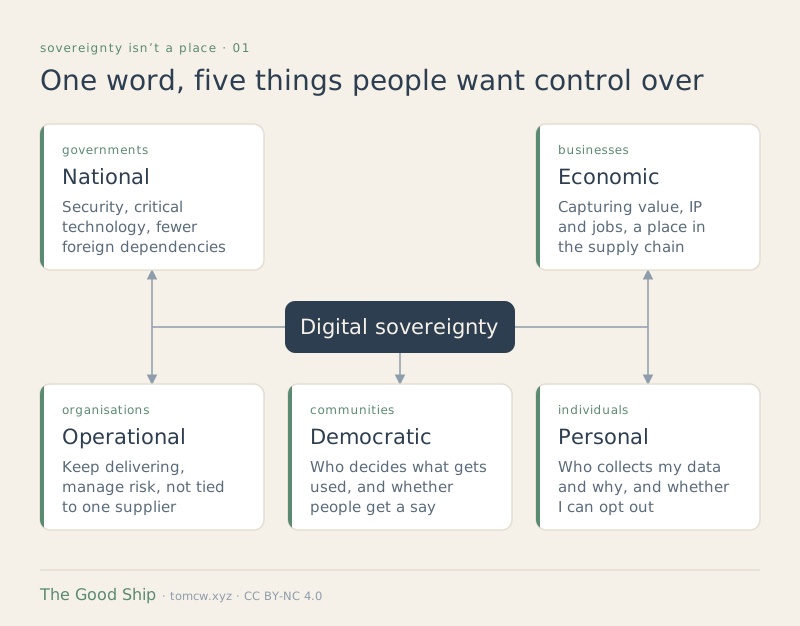
Governments tend to mean national sovereignty: access to critical technology, national security, less reliance on foreign suppliers. Businesses tend to mean economic sovereignty: capturing more of the value, building IP, creating jobs, having a real place in the supply chain. Organisations usually mean something more operational. Can we keep delivering, get at our information, manage risk, and not be entirely dependent on one supplier? Individuals care about personal autonomy: who collects their data, what happens to it, whether they're being watched, whether they can opt out. And communities care about democratic sovereignty: who decides which technology gets introduced, whose interests it serves, and whether the people affected get a say.
All pretty legitimate, but defintely not interchangeable.
A government could become more technologically independent by backing a domestic monopoly. Good for national economic interests, not much use to consumers, small businesses or citizens. A council could reduce its reliance on overseas suppliers while bringing in a system that makes it harder for people to challenge decisions. A company could run an entirely open-source stack and still use it to surveil people.
So when someone says they want more digital sovereignty, my questions are: more sovereignty for whom? Over what? And what for?
Back to the AI stack
The UK government talks about being an AI 'maker, not a taker'. Fair enough, nobody wants to just pay to use technology owned and controlled somewhere else. But what does being a maker actually mean? Would an open-weight model developed in France, hosted by a UK company and used by a local council count as sovereign AI? What about an American model downloaded and run entirely on a laptop with no internet connection? Or a British model you can only get at through an American cloud provider?
I don't think there's one answer, because AI isn't one technology. It's a stack, and each layer raises different questions.
Dependency isn't the enemy
I don't think sovereignty means building and running everything ourselves. That'd be impractical, expensive and a bit daft. Technology has always relied on collaboration, shared standards, international research and people building on other people's work. Open source is the obvious example: its strength comes from contributors all over the world, not from one company's nationality.
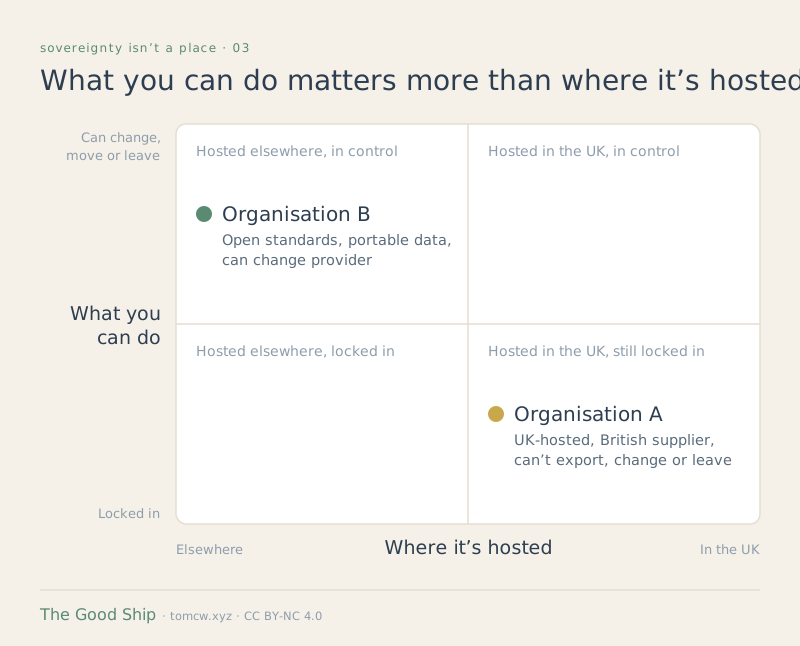
Whose sovereignty, though?
One more thing I don't think we should skip. Sovereignty can be used to justify concentrating power just as easily as distributing it.
A government wanting national sovereignty might want more control over data, infrastructure and digital systems. A large business might want to protect its IP and market position. Neither automatically means more power for citizens, communities or smaller organisations, and sometimes it means the opposite. A nationally controlled surveillance system can strengthen the state's autonomy while undermining the autonomy of everyone living under it. A powerful domestic tech company can strengthen the economy while making its customers more dependent.
So as well as asking who owns the technology, we need to ask who governs it. Who's represented? Who benefits? Who carries the risk? Who can challenge decisions? Whose freedom are we increasing, and at whose expense?
So what do I mean?
Here's where I've landed, for now:
Digital sovereignty is the meaningful ability of people, organisations and communities to choose, shape, understand and govern the technologies they depend on, while keeping the capacity to change, challenge or leave those dependencies.
It's not about doing everything ourselves. It's about having real agency over the technology that increasingly decides what we can and can't do: the ability to make informed choices, and the resources and rights to act on them. It covers economic opportunity, resilience and security, but also democratic accountability and a fair share of the benefits.
It's not something you can declare you've achieved, and it's not binary. We can be more or less sovereign in different parts of our digital lives, strengthening capacity in one place while increasing dependency in another. Sometimes accepting a dependency is perfectly reasonable, and can even increase our ability to act. We just need to know what we're trading and why.
A useful test might be: can we make meaningful decisions about the technology that affects us, and can we act when we want things to be different? If not, there's work to do.
An invitation, not a declaration of independence
Which brings me back to the Unconference in Newcastle.
The point isn't to agree on one definition but it's useful for us to share what we mean, which is why we're going to be writing that up for the event shortly.
You don't need to agree to come. Bring your own thoughts, ideas, definition. It'll help us all to understand what we're each trying to achieve, where that overlaps and where it conflicts, and what we might actually do about it. What could we build, change or share? What should we stop doing? Where do we need new capability, and where do we just need to make better choices with what we've already got? And how could the North East lead by creating practical examples of technology that serves people, not just by attracting investment?
Sovereignty isn't really about planting a flag on a patch of desert or a platform in the North Sea. It's about having the power, individually and collectively, to shape what comes next.