The end of Data For Action
Reflections on building a different kind of consultancy- one that chose uncertainty over certainty, conversations over transactions, and approach over outputs.

After three years, Tom (F) and I are bringing Data For Action to a close. As Tom heads off to exciting new pastures, we're ending it together - Tom & Tom are no more. But before looking to the future, I wanted to capture what we learned, what we built, and what I hope others might take forward.
What We Learned About Working Differently
We Chose Uncertainty, and It Made Our Work Better (but made it harder to actually make money)
One of our core ideals was to lean into uncertainty. We didn't go into projects with preconceived solutions. We asked better questions. We prototyped. We experimented. And yes, this probably cost us some contracts - funders and clients often want the comfort of certainty, especially when budgets are tight. But the work we did produce was deeper, more contextual, and more likely to actually work because it emerged from real conversations with real people.
One thing I learned through all of our work was this: the best results come from being open to possibilities. Going in with a preconceived idea may be easier to deliver, but it likely won't be the best outcome. The tension you feel when you don't know exactly where a workshop will lead? I think that's a feeling that tells you you're pushing at the boundaries of what's possible and I think this is a good place to be.
What I hope others do differently: Reward uncertainty. Fund discovery. Value questions as much as answers. The sector's tendency to demand certainty before releasing resources means we often fund safe, predictable work that doesn't actually shift the needle.
Data and Maps as Conversations, Not Just Outputs
We developed a way of thinking that fundamentally changed how we approached our work: data as conversations and maps as conversations.
When we worked with people in Sheffield to map their neighbourhoods, this wasn’t a technical approach, we weren't just drawing boundaries - we were creating spaces for people to talk about place, belonging, and what matters to them. We built Map My Patch to support this work, allowing communities to define their own places rather than accepting administrative boundaries that meant nothing to them.
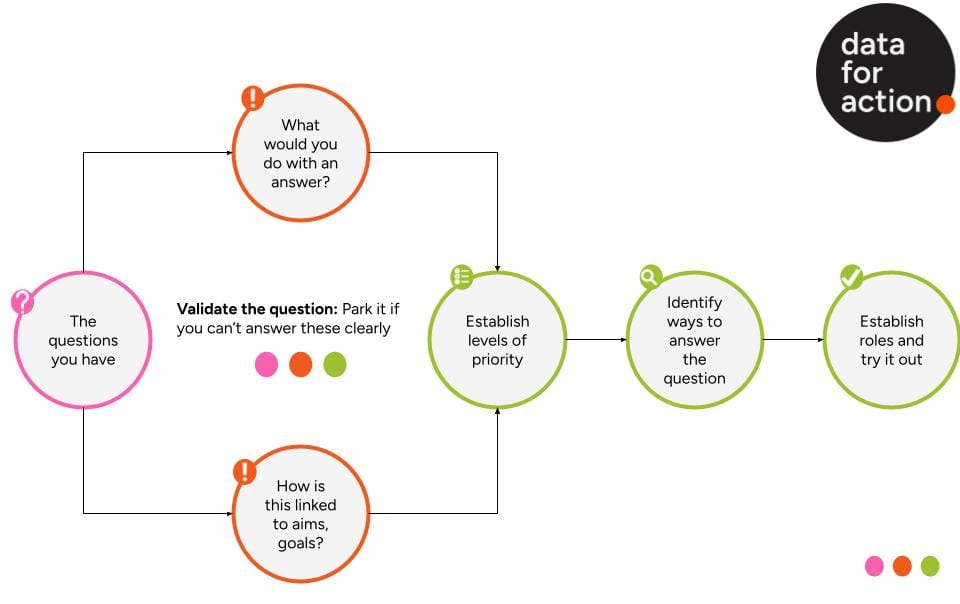
When we developed the question-based approach for the Insight Infrastructure work, we created Questions For Action - a tool that takes users through our questions-based approach, helping teams move from 'what data do we need?' to 'what questions are we trying to answer?'
This shift from static outputs to dynamic conversations meant that our work could evolve, be owned by communities, and continue long after we moved on.
What I hope others do differently: Stop treating data and maps as finished products. They're conversation starters. They're ways of bringing people together to discuss what matters, what's changing, and what we might do about it.
The Work We're Proud Of
Sheffield Neighbourhoods: When Communities Own the Map
This work, led brilliantly by Tom F, demonstrated everything we believed about community-owned data and citizen-led approaches. Sheffield now has 147 citizen-defined neighbourhood boundaries that are actually used in conversations across sectors.
The innovation here wasn't technical - it was about power and ownership. We showed that when people recognise themselves in the data, they engage differently. They talk about challenges, offer ideas, take ownership, and build resilience.
What we learned: People don't live according to administrative boundaries. They recognise physical markers, relationships, and neighborhoods. Data that reflects this reality is more useful.
What didn't work: While people lauded the approach, almost no one wanted to properly fund it. Huge sums went to commissions writing white papers and holding events at the House of Lords (we declined with a 'what a f*cking bizarre place to hold a neighbourhood event' response), while we ran this work on a shoestring.
What I hope others do differently: Actually fund the hard, transformative work, not just the comfortable stuff. Citizen-led approaches to power and data take time and sustained investment. They're messy and uncertain - and that's exactly why they're valuable.
Tools we built: Map My Patch to support communities in mapping their own places and having conversations about what they see.
Local Needs Databank: Flexible Standards for the AI Era
With the databank we tried to solve a fundamental problem: how do you create data standards that are strict enough to be useful but flexible enough that people will actually use them?
Our answer was to use metadata and Schema.org standards to create a middle ground. You could drop in a CSV file, tell us which columns meant what, and we'd handle the rest. Your column could say 'location' or 'where' or 'office' - we didn't care, we'd make it work.
What we learned: Flexible standards and metadata aren't just nice-to-have - they're becoming more important as we work in the AI era. The ability to describe and transform data flexibly is crucial.
What didn't work: We focused heavily on the contribution/upload mechanism (rightly, I still believe), but when leadership changed at the client, new priorities emerged. The project never got the continued development it needed. This taught us that organisational memory is long on emotions but short on details - and that sometimes you need to deliver something people can "hang their hat on" early to maintain support through leadership changes.
Insight Infrastructure: Questions Before Data
Working with Joseph Rowntree Foundation and charities across the UK, we explored what a data sharing movement might look like. But instead of starting with "what data should we share?", we started with "what questions do we need to answer?"
This led to developing our question-based approach and question banking methodology - now available through Questions For Action.
What we learned:
- Questions are data layers in themselves. They reveal assumptions, clarify priorities, and create dynamic data ecosystems
- Minimum viable data standards can work if governance is strong
- Starting with questions builds ownership and purpose
What didn't work: Again, changes in leadership meant we never got to develop the prototypes further.
What I hope others do differently: Start with questions. Always. And capture those questions as data - especially in an AI era, the journey of inquiry is as valuable as the destination.
ClientEarth: Cultural Change Through Showing Things
Our 18-month engagement with ClientEarth taught us perhaps our most valuable lessons. We summarised them in Lessons Learned from Working Together, but a few stand out:
- Show things, don't just talk about them. Even imperfect prototypes beat perfect descriptions.
- Vibes matter. Creating enough trust and safety to be playful and experiment liberates people from stifling professional expectations.
- Clear language beats jargon. Simple communication ensures everyone knows what you mean - especially important in multilingual environments.
- The internal team makes it work. No matter how good we were, ClientEarth's team made this a success by trusting us and the process.
What we learned: Approach matters more than outputs. If you don't bring people along with you, the final tool won't matter. When the team just started using the impact tool without fanfare, we knew we'd got it right.
Wildlife Trusts: Getting Prototyping Right
With the Wildlife Trusts, we hit our stride. We translated their Evidence Competency Framework into a self-assessment tool, and crucially, everyone understood it was a prototype. There was no scope creep. We did enough to validate assumptions and support the team to secure funding for full development.
What we learned: When expectations are clear and everyone embraces where we are and what we are really trying to achieve, work stays focused and valuable. Sometimes prototypes are there to show you what not to take forward as much as what to take forward.
What We Built That Will Keep Working
Beyond specific client projects, we developed tools and approaches that are now available for the sector:
- Questions For Action - Our question-based prioritisation tool for individuals and teams
- Open Recommendations - Nearly 200 sources of sector recommendations, AI-parsed and searchable
- Map My Patch - Community-led neighbourhood mapping tools
- Sheffield Neighbourhoods Archive - Boundary files preserved for the long term
- Question banking methodology - Available through our Notion repository
- Flexible data standards approach - Documented in our project repositories
Reflections on Running a Small, Different Agency
Were we really an agency? Probably not. When you worked with us, you got Tom and Tom. We were purposely small because we wanted to do good, important, deep work, not scale a business.
This left us in an unusual position. We had no junior staff to pad margins, but we weren't just freelancers either. We took risks. We tried to change how people did things. We embraced uncertainty when others wanted certainty.
What I learned: Being different has costs. As the cost-of-living crisis hit, people took fewer risks. Work we pitched for - like Local Motion's learning framework, Place Matters mapping, Ealing's community asset mapping - we might have secured if we'd been more traditional, more certain, more safe in our proposals.
But that's not how I work. And I don't regret it.
What I hope others do differently: Value the different approaches. Fund the teams doing things differently. Pay them properly for the risk and innovation they bring. Don't just say you value innovation - actually resource it.
On Being Open By Default
We actively shared our work, opened up our processes, and showed the inner workings. I think this will have an ongoing impact. But I also think people assumed we were somehow funded to do this - that money was readily available for this kind of sharing. It wasn't.
What I learned: Open working is valuable and rare - but it needs to be recognised and funded accordingly. Transparency and open documentation should be valued, not taken for granted.
Building Resilience Through Uncertainty
One of my core frameworks - developed more fully in my solo work - is about collective resilience: the capacity of interconnected organisations to anticipate, prepare for, respond to, and adapt collectively to change, disruption, and uncertainty.
Data For Action embodied this. We built tools and approaches that helped organisations embrace uncertainty rather than avoid it. We created structures that liberated rather than constrained. We asked questions that opened up possibilities rather than closed them down.
What I hope others do differently:
- Build for resilience, not just efficiency
- Create space for uncertainty and experimentation
- Trust that the messy, conversational, question-led approach might be harder to fund but is more likely to create lasting change
- Remember that approach matters as much as outputs
What I'm Taking Forward
I'm immensely proud of what we've done over the last three years. We might not have got everything right, but we did it the right way. We embraced uncertainty, we were open by default, we really lived our principles.
The tools we built - Questions For Action, Open Recommendations, Map My Patch - continue to be available. The approaches we developed - data as conversations, maps as conversations, question-based methodology - are documented and ready for others to adapt. The citizen led boundary files for 147 neighbourhoods in sheffield are available on an archive site
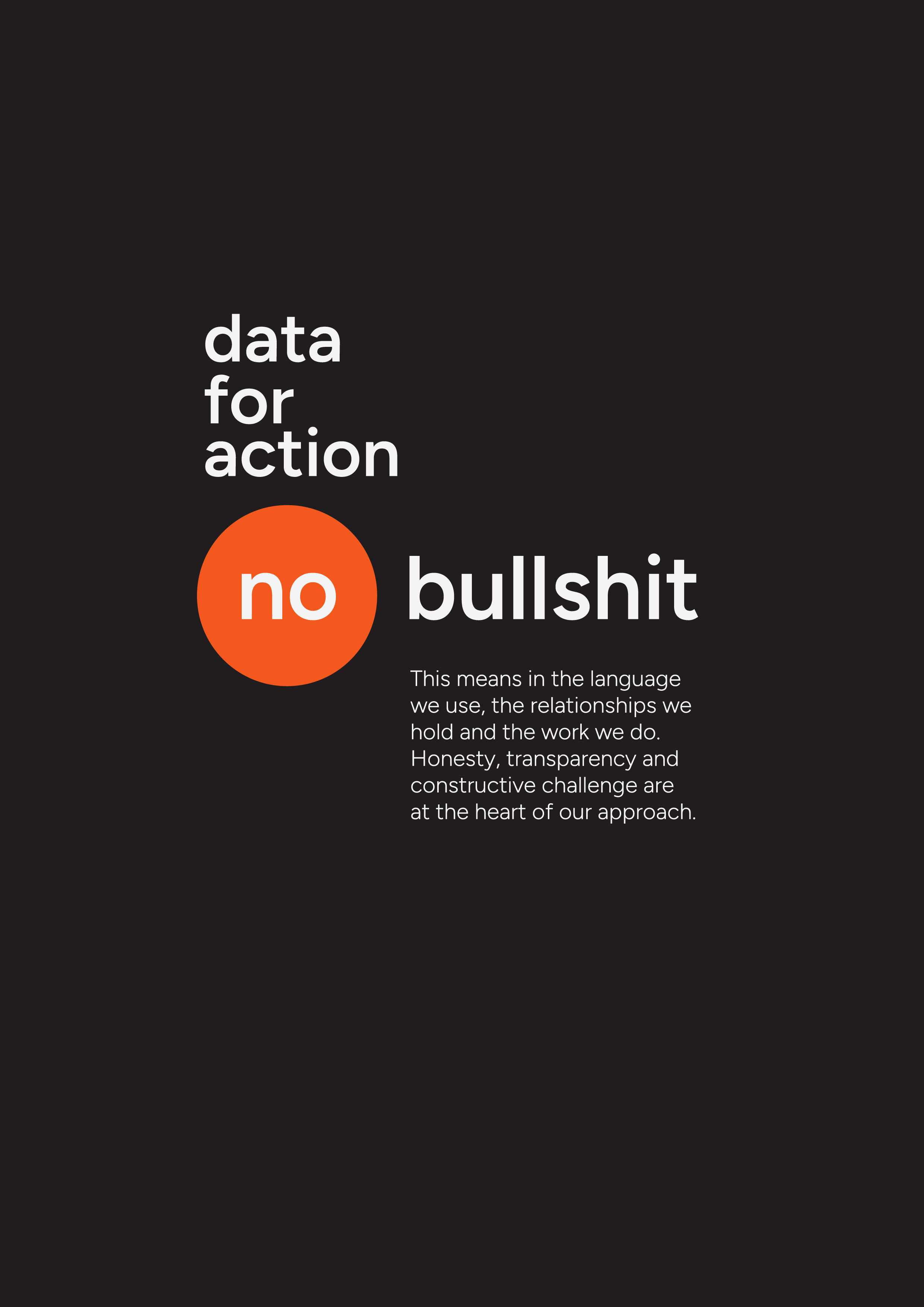
And this principle? Well obviously this is one I keep:
I'll miss working with Tom F, but I'm excited to see what he does next. And I'm excited about what comes next for me, carrying forward everything we learned about working differently, embracing uncertainty, and creating conversations that matter.
Want to learn more about our approach or use our tools? Everything is documented and available:
- Questions For Action - Prioritise your most important questions
- Open Recommendations - Search sector recommendations
- Map My Patch - Community-led mapping tool
- Data as Conversations - Our thinking on community-owned data
- Maps as Conversations - Our approach to citizen-led mapping
- Project repositories - All our documented work