Weeknote 34
The garden of ideas, self permission slips, llms.txt generator, open recommendations, Organisational Resilience, tech resilience, modes of thinking. It's been a busy but good week!
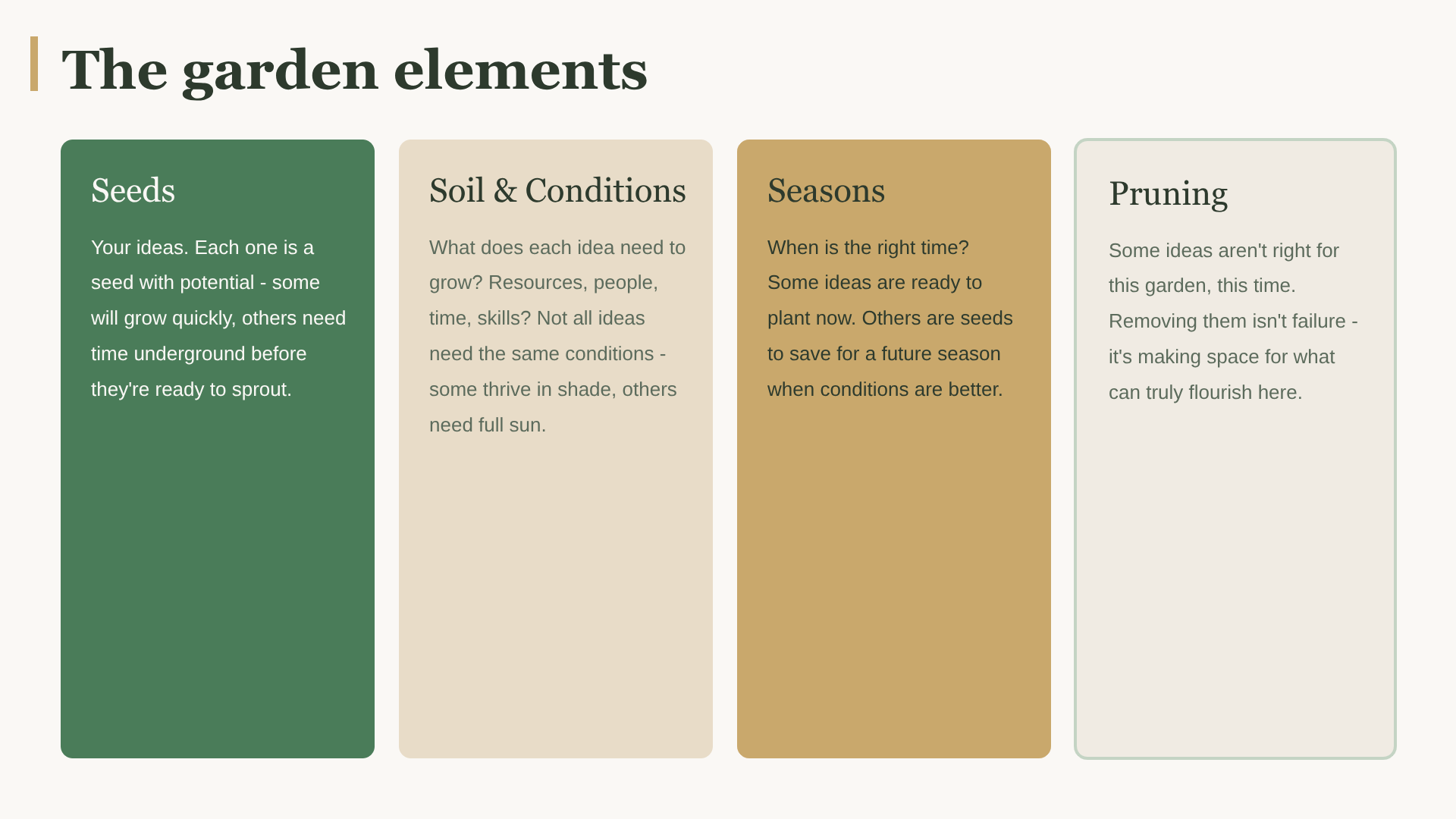
A busy and focused week.
Much of this week was taken up by the start of the Organisational Resilience programme I've designed alongside Liz and Lloyds Bank Foundation. We kicked off with a two day immersion into OR in Telford, which for me meant travelling down Tuesday evening and getting home late Thursday, so that was most of the week really. It went well I think, people seemed positive about it. It was interesting to have one participant say on day two that they really had to reflect on the first evening and challenge themselves to actually slow down, and not just do all the time. Yes, different modes
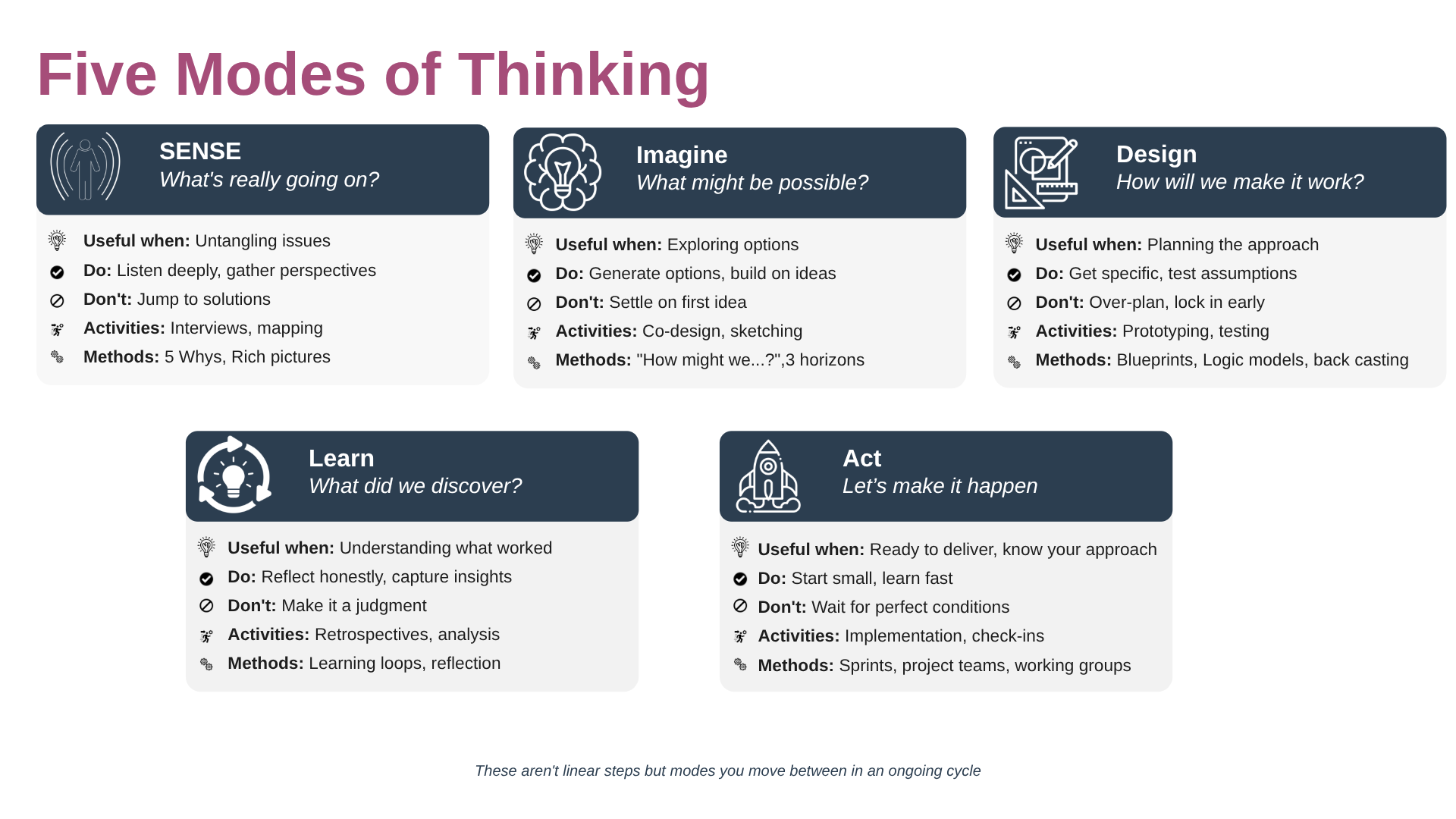
I share this quite a lot. This isn't to say these are the only modes, or that this is the only way to define it, but it's just to highlight that if we are just doing all the time, we are probably missing out. It was great to actually hear someone come back the next day, having reflected and feeling safe enough to say this. As a facilitator and designer of a programme there can be a pressure to go for the flashy big bang stuff, but we purposefully leaned into fundamentals, of reflection, of making decisions, of adaptation.
And to get us into that the right space, I used some tools to frame the start of the day which can be helpful. I asked people to give themselves permission for something for the time we are here, and to keep checking back in on that. I shared that mine was to have permission to say "I don't know", which I think is a powerful one, lean into uncertainty.
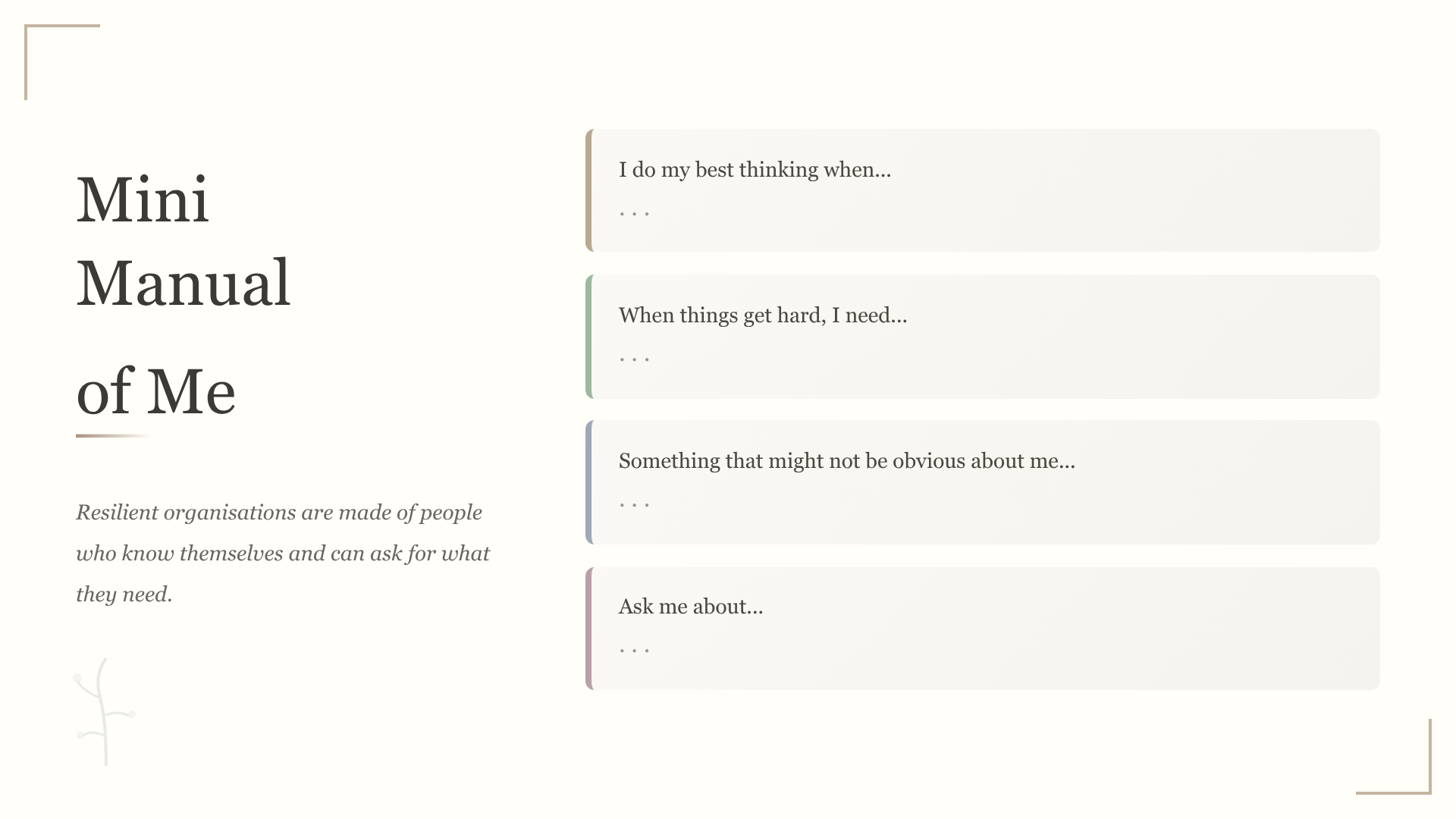
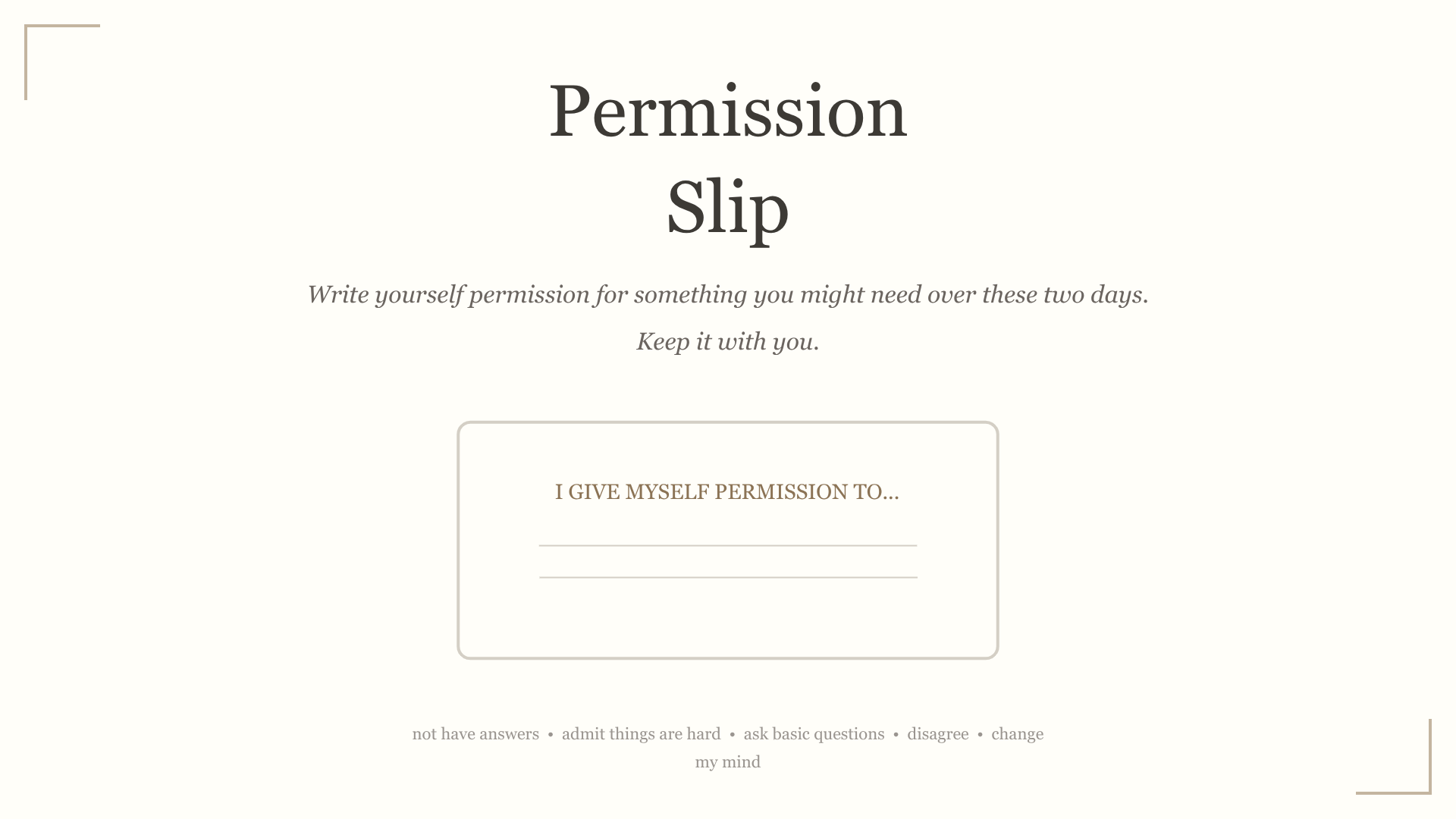
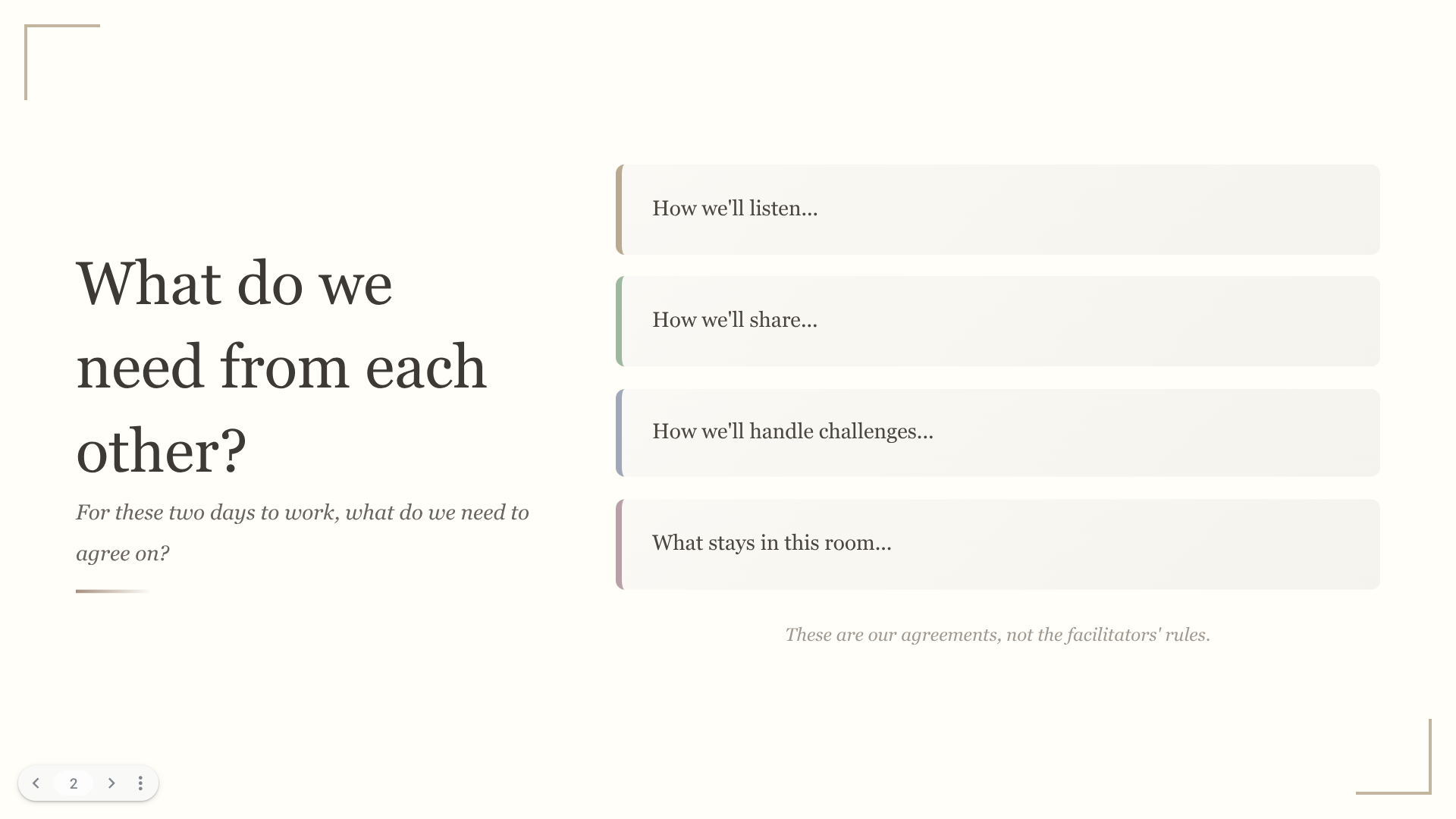
3 tools. Mini Manual of me, Permission slip and what do we need from each other.
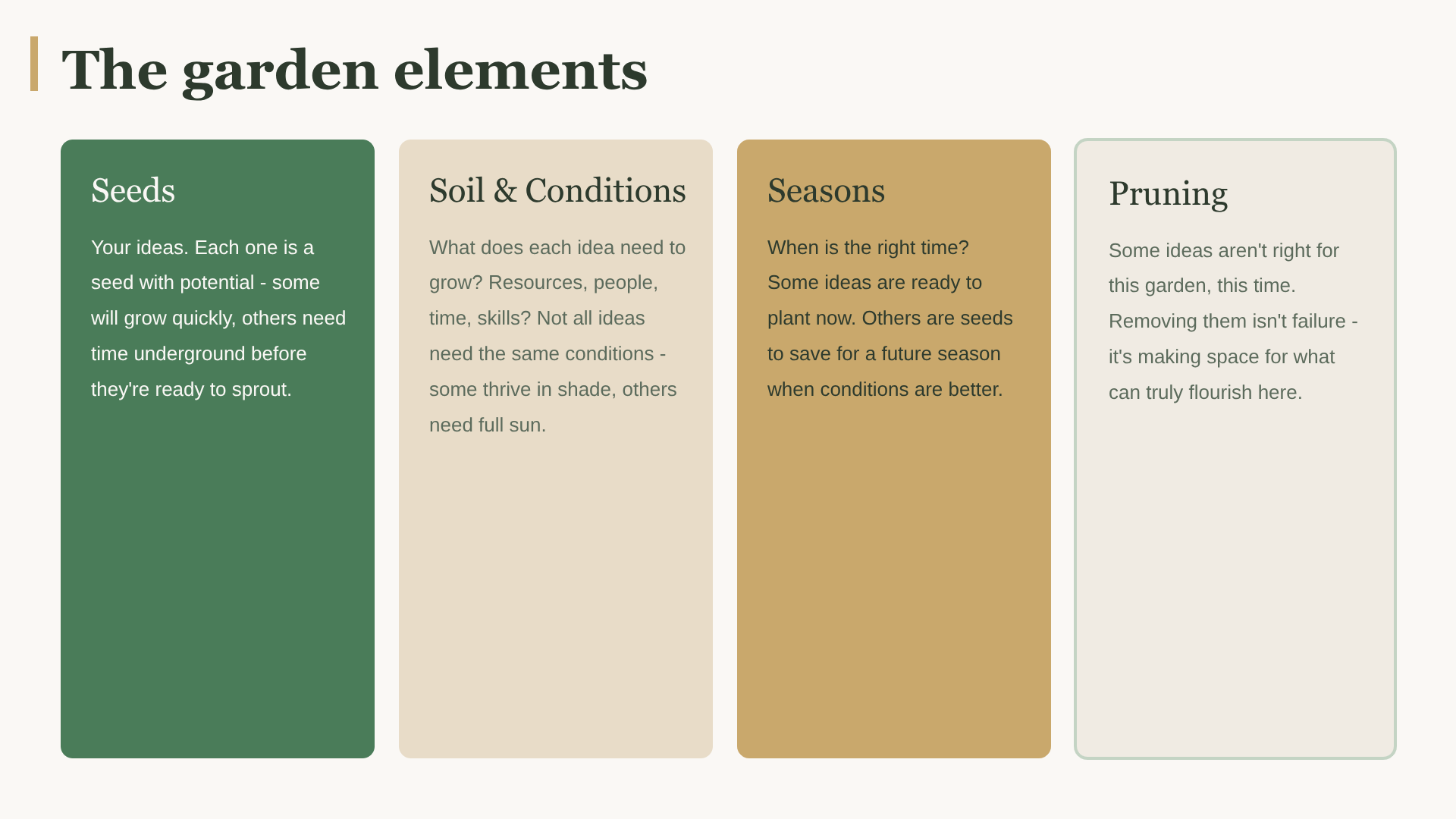
One of the other things I shared was something I call The Garden of Ideas. It's an alternative to note taking and to-do lists. I encourage people to write things down, ideas, but to not feel the pressure that everything needs to be done, they are just seeds, some you will plant, some you won't, and you need to consider, reflect on what they need and when.
So, all in all, a good couple of days. I'd probably change some bits for next time, but that's ok. It was great to have Liz there, to bounce ideas off, and slightly adapt things on the fly based upon the people in the room. One thing I thought was funny was that at the end of day 1 i asked about one thing that will stick with people, and at least a few people said "stop, start, continue" - which was something I introduced on the fly...so not anything I'd spent hours carefully curating into the slides...typical ;)
What else did I do this week?
Met with Hannah to talk a bit about her How Might We Community which was nice, if a little short on time. Look forward to hearing more as it's really starting to take shape.
Had one of my 'random chats' with Oliver French who's doing some great work exploring and unpicking philanthropy and grant making, using data and insight. Give him a follow.
Had a board meeting and AGM for Tandem. It's been a challenging few months, like for a lot of small charities, but despite that, still doing some great work.
Met with Doug to chat about a variety of things, but one we are fully getting into is helping organisations to really consider moving away from US/Big tech, or at least consider both the ethical and risk side of things. There are alternatives, but it takes more that just a list of alternatives. I think we've got a nice process of support taking shape here. Watch this space.
Finally, spent some time with Tom F on his last day at Data For Action before he starts his new fancy job on Monday and gets innovating. We did all the boring official things. I've still got a couple of bits to do like email forwarding via cloudflare, send the notice to the gazette (as if that's still a thing) and wrap everything up.
Things I shared
I shared a couple of things this week. One was the llms.txt generator I was making, which creates a few llms.txt file for you, based on your website. It's tuned towards social purpose organisations, so it's more helpful that the generic ones (at least I think it is). There is also a paid for version (got to keep the lights on) which runs an assessment of your llms.txt output file and what your website is saying about you and returns recommendations of what to improve. There is also a subscription which runs this monthly, looking for changes to your site. All reasonably priced (£9). Check it out here https://llmstxt.social/ (and if you want the actual repo as it's open source it's here)
I also shared Open Recommendations more broadly, even though this has been around for about 6 months. It got a good reception. If you would like to know more about it, or maybe want help to think about how it could be useful for you, or how to maybe implement something like this in your organisation let me know! (Also I should finish the half written blog about how I made it and the choices I made)
Interesting things.
Fewer things here this week, as been a bit busy!
Maybe, finally—the end of SQL - Vibe and verify.
ClimatePolicyRadar/all-document-text-data · Datasets at Hugging Face - We’re on a journey to advance and democratize artificial intelligence through open source and open science.
The Done List - AI agents are revolutionizing productivity by transforming traditional to-do lists into 'done lists' of completed work awaiting approval. Learn how the disappearing middle of work changes everything about planning & productivity.
Why Decentralised Place-Based Approaches Can Fail - Genuine place based decentralised approaches are not merely structural changes; they are assaults on the fundamental logic of the traditional organisation which is designed to minimise variance and…
Welcome to Rise Against Big Tech - Our campaign is geared towards individuals and organizations that are ready to move to hosting providers more aligned to the values of collaboration, transparency, equity, community control and democracy.
What is a data democracy, and how can your company build one? | MIT Sloan - Leaders who actively design for the widespread use of data assets generate three times the revenue from data monetization compared with their peers.
The Watershed Pollution Map - Watershed Investigations - Wondering what's in your water? Now you can find out. The Watershed Pollution Map reveals a huge range of potential pollution sources that can harm rivers, lakes, groundwater, coasts and more. Click to find out what's happening in your back yard.